Yet Another Cleaning..

It has been 4 months since I last cleaned my PC and my siblings never bother to do it for me. My casing and monitor are covered with dust and I dare not imagine the interior yet. Been away to NS for about 2 months time and it's about time for me to clean the mess. The post should be written on 9th September on that day itself but there are many things hogging up my free time and hence the delayed post.

Well, nothing particularly interesting about PC cleaning and some might have saw it in my previous post. The thing I to post is just to show the capability of nifty-fifty a.k.a. EF 50mm F1.8 II that was bought recently (on that time period).


The filters are the first line of dust defense and you will know the what the condition will be inside. After four months of defending and the results are as below.

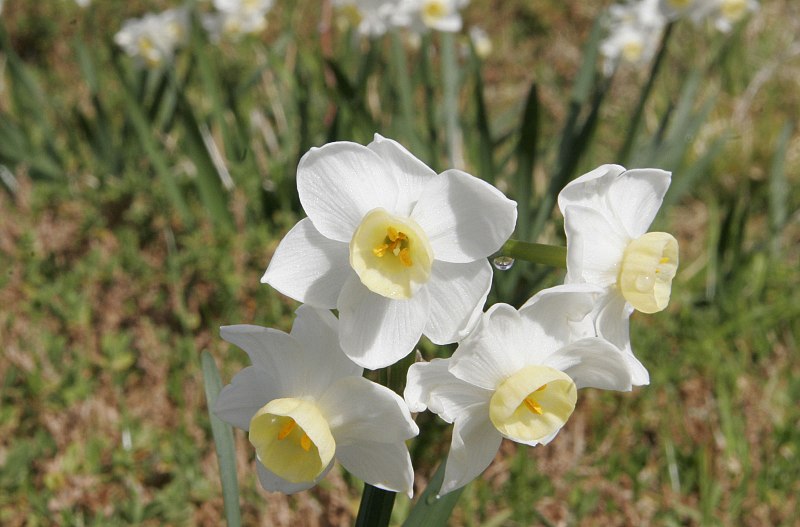
Here, you can notice the narrow DOF @ F1.8
left side is clean version, right side is the dirty version, look at all the dust

Narrow DOF @ F1.8

Wider DOF @ F4.0

The next to dis-amble will be the fans, which is the second most dusty unit in the casing. Three different Xigmatek XLF fans used in my PC.


Removing the fan from the heat sink shows that the amount of dust accumulated is still acceptable, thanks to the front panel filters.

Took it out for a clean water run and dried naturally after rinsing off the water from the fins.


The thermal paste is visible here. I always wanna try lapping my HSF but somehow I've stop overclocking my processor for quite some time, so I will just leave it as it is for the mean time.


The socket 775 of my E7400, with the processor attached to it of course. Next will be the cleaning for my graphic card and it is done after having my dinner, which is quite late already.


Here comes my 4850 TurboX, and stripped down to pieces within minutes with my screwdriver.


The main PCB, GPU, heat sink, the fan and the UV reactive cover. Everything is cleaned and assembled back into their respective places. The fans are screwed on and the front panel is cover. A picture of my Blue Scorpion (was Red Scorpion but I changed the fan already) was taken and peace out!

Well, all the pictures were taken with my nifty-fifty and mostly at F1.8 because I wanna test out the sharpness and DOF as well as the performance of it. The DOF is too narrow to display my subject unless I'm just trying to show a very narrow/small subject.

KL Book Fest 2010 @ KLCC


This year's KL Book Fest was held from 4th to 12th of Sept, at KL Convention Center. Similar to last year, the books are categorized according to countries of its publisher. What's different from last year is the type of booths, last year there were non-book related booths such as snacks and camera booth. This year, only a tea booth is not related.


I think this is the first time I brought my 550D into an "event" venue, but I didn't bring it for this Book Fest, I brought it for some KLCC shots instead. Wanna try out some outdoor and night shots of KLCC.


The Book Fest this year was quite boring and the crowd is less too due to weekday. My brother , sister and I decided to go for a walk in the Suria Park to try out some outdoor shots. We also went indoors for some walkaround. We ended up at the outdoor fountain area resting and stumble upon a family of foreigners with their two cute daughters running around.


After some time, the two girls ran too far away from their parents and caught up in a gang of tourists from middle-East, I guess. All of them are craze to take pictures with the two little girl and they look shock due to the sudden event. Then this group of tourists walk towards their parents and took pictures with them. This time they even carry the girls up on their arms. They left afterward.


The sky slowly turns dark and the thousands of lights on the KLCC towers started to lit up. I took many shots of the KLCC during the evening and the night as well. There have been many awesome examples of KLCC towers taken, mine is just lower average ones. Should have try with different techniques including long exposures but too bad I didn't bring my cheapo tripod along. All shots taken handheld.


We went to McDonald's for dinner after that and head home. My dad suggested to take some pictures at Dataran Merdeka but too bad the camera ran out of battery after 2 days of shooting. It really last quite long but I think I should get an additional battery at least, before thinking of getting a battery grip for it. It will come in handy for trips and vacations in the future

The Noob Experience

Well, another post about my 550D before I continue with normal daily blogging post. This time I will like to share about my noob experience for a rookie DSLR user. From the start, till my current state of knowledge.

I remember the first thing I did after unboxing my 550D is to try out some shots. As I said before, I have least knowledge about the camera settings and all I need to do is to get hands on experience while learning along the way. I start off with the P mode and tried to take a few shots. When I'm reviewing the pictures taken through the LCD screen, the images were sharp but somehow I feel that a normal compact can also produce such similar image quality. Besides, I also wonder where is the bokeh I expect to see from a DSLR photo?

Stupid me, yes I'm. I thought one lens can satisfy all conditions, now only I know that each lens delivers different types/quality of images. Oh well, I guess I have to start from scratch and learn everything again. Starting with the booklets provided and the camera manual. There are lots of terms and jargon to learn from and I will simply list out some and compare the before and after.

Shutter Speed (Exposure Time)
Before:
I thought shutter speed is only used to freeze a subject with higher shutter or to show movements of a subject with slower shutter.

After:
Besides the above mentioned, shutter speed also controls the amount of light entering the camera through the exposure time, and to be captured by the sensor. The aperture size has a relation between the shutter speed used. Inappropriate use of shutter speed may result in overexposed or underexposed images. Faster shutter speed also reduces blur caused by handshake. There are different optimum shutter speeds for different focal lengths in order to avoid or reduce handshake. This is what I learn so far, if there is any other information you would like to share, do drop me a message.

for more reference, visit wikipedia

Aperture/F-number (Both may be the same but actually is different technically)
Before:
I know nothing about aperture before this. Often saw the F numbers on the labels of the lens but never know what it means.

After:
Understands reassembles the pupil of a human eye, a hole that permits light rays to pass through it. Controls the depth of field (DOF), the amount of light enters. Comes with different number of blades. What else? There's much to learn about controlling aperture and F-number in order to produce sharp images of different effects. Each lens has their own optimum F-value to be used in order to achieve maximum sharpness, also depends on the type of camera body used.

for more reference, visit wikipedia as a start.
Aperture - wiki
F-number - wiki

Metering mode
Before:
I mistaken it as the area used by the camera to auto-focus

After:
It's a way of the camera to measure the exposure

further reading, wikipedia

Well, there's a lot more to learn about the technical terms and also ways to utilise it, as well as hands on practice. The above is just some examples of confusion that often face by rookies like me in the beginning. However, no doubt I will use my free time now to gain more knowledge and to learn all the different techniques and to understand how a camera and a lens work to bring out an image, particularly the behaviour of each lens.

Besides the technical terms that are commonly found in photography, not forgetting the terms used to label the lens, or to be precise, Canon lenses. Before this, besides the focal length, I do not know how to read the labels off the lens itself. After reading a booklet given by Canon, which is the "EF Lens Selection Guide", it all becomes clear to view.

The EF series lenses are design to mount on Canon EOS family cameras and the EF-S series is specially for cropped bodies such as my 550D. Some lens nomenclature that are common to find on a EF/EF-S lenses are:

IS - Image stabilisation, similar to Nikon's VR, Tamron's VC and Sigma's OS, it has a built in mechanism to counter handshake and enables the user to use 3 stops slower shutters than non IS lenses.

USM - Ultrasonic Motor, similar to Nikon's AF-S, Tamron's USD and Sigma's HSM, different from the normal micro motor used in common lenses, provides, fast, quiet and accurate focusing.

DO - Diffractive Optics, similar to Nikon's ED, Tamron's LD and Sigma's APO, are special coated glass/optics, to reduce CA (Chromatic Abbreviation)

L - The red L of Canon lenses indicates "Luxury", is a perfectly built lens in terms of performance and quality for the professional line up of lenses. This luxurious lens also comes with a hefty price tag and commonly used by professional photographers. The L-lenses can be read off from the red L letter after the aperture value, as well as the red ring around the lens and some will appear in white colour for the lens body.


an example taken from wikipedia - The Canon EF 70-200mm f2.8L IS II USM

Besides the nomenclature of the lenses, I also learn to classify different types of lenses including standard zoom, telephoto, super telephoto, prime/portrait, macro, wide angle, ultra wide angle (UWA), tilt shift and some special effect lenses such as lomo and fish-eye.

Some rules/terms regarding photography, for example:-

Bokeh - Blur background image rendering, originated from the Japanese word "bokeh", which means blurry. Often used to make the subject stand out from the blurred background especially in portrait shots. The smaller the F-number, the more bokeh you got.

Depth of Field - The portion/area of the image which appears to be sharp. The simple rule is, the smaller the F-number, the smaller the DOF. DOF is important so that the subject you wish to capture is sharp and clear. Compare both pictures below for a better understanding.


Picture taken @ f/5 - from wikipedia


Picture taken @ f/32 - from wikipedia


A general understanding of what is DOF - from wikipedia

A very useful online DOF calculator: here

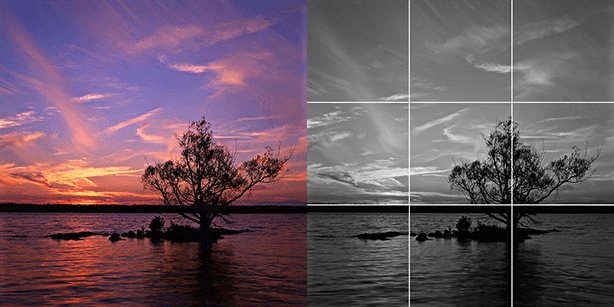
1/3 Rule - Rule of composition which originated from the art of paintings. "The rule states that an image should be imagined as divided into nine equal parts by two equally-spaced horizontal lines and two equally-spaced vertical lines, and that important compositional elements should be placed along these lines or their intersections." - Bryan F. Peterson (2003)

Example of the 1/3 Rule applied - from wikipedia

Sunny 16 Rule - A reference rule to use when taking pictures under sunny condition.

Example: (wikipedia)
  • On a sunny day and with ISO 100 film / setting in the camera, one sets the aperture to f/16 and the shutter speed to 1/100 or 1/125 second (on most cameras 1/125 second is the available setting nearest to 1/100 second).
  • On a sunny day with ISO 200 film / setting and aperture at f/16, set shutter speed to 1/200 or 1/250.
  • On a sunny day with ISO 400 film / setting and aperture at f/16, set shutter speed to 1/400 or 1/500.


Aperture Lighting Conditions Shadow Detail
f/22 Snow/Sand Dark with sharp edges
f/16 Sunny Distinct
f/11 Slight Overcast Soft around edges
f/8 Overcast Barely visible
f/5.6 Heavy Overcast No shadows
f/4 Open Shade/Sunset No shadows
Add One Stop Backlighting n/a

Well, that's pretty much on what I would like to share about the technical parts. There's more to explore but I think I covered enough for now. Maybe I'll share more of my knowledge in future posts. I get to know all these through readings, be it from books or from the internet. Wikipedia may not be the best source, but it is the easiest to start with before heading to the more technical ones.


My First 1000 frames
Well, I read somewhere saying that the first 10,000 frames of your first DSLR will be wasted shutters, more or less useless as we are in our learning progress. All the shutters are wasted when we learn on how to correctly expose our pictures, how to grab the correct composition, how to control the aperture and stuff.

As for my first 1000 frames, it is pretty much true. My first outdoor shooting was at KLCC together with my NS friends. Due to the fact that I'm very new to DSLR, and do not know about all the manual shooting modes and their functions, such as M, Av, Tv etc. I start off with the M mode because it gave me more controls such as both shutter and aperture, that was what I thought at that time. I do not know what is the use of Av and Tv, so I choose not to play with these settings until I read up about it.

The pictures came out under my M mode often underexposed or overexposed, sometimes out of focus (OOF) as well, which is quite frustrating. Only a few of them are usable. Well, that was my first 100 frames, pretty normal for a starter like me.

My first indoor night shooting is to celebrate my gf's birthday, belated, at Palate Pallete. Well. this time, the results are better but still more to learn. I do not know how to catch the angle and correctly compose a food picture. I do not know where to focus in order to produce sharp pictures, but I do know how to correctly expose my pictures. It's like I level up-ed my first level.

My second indoor/outdoor shooting was at 1U and The Curve, together with my NS friends. This time, having the experience from the previous ones, I'm able to get more usable pictures than before. But there's a quite funny experience where I do not know where to set for 10 sec timer for my 550D because I haven't read it from my manual. From the camera menu itself, it only shows a 2 second countdown timer. I didn't know the remote option in the camera is actually the 10 sec countdown timer. End up I have to rush from my camera to the pack when I'm trying to take a group photo. LOL at me, yes it is.

The remaining of my 1000 frames were shot in Desa Park City, together with my gf's dog. Was trying to learn to snap some pet pictures outdoor. Which turn out average and nothing special. There's more to learn about this and another field to explore about panning. Should try it again with my prime lens in the future.

The reason I wrote such a long post, explaining this and that, is not to show off about my camera or my limited knowledge. This is to share about what a newbie like me confused about photography and the ways to learn it. Excessive reading and hands on practice is the way to go. Learning about the behaviour of their own cameras and lens will be an advantage for snapping breathe taking photos as well as for future upgrade purposes.

There is still another field of photography that I'm really blur at, which is flash photography, or strobist. It is a different field of photography which requires mastering of light and the ways to manipulate it.

Learn more about flash photography through --> Strobist: Lighting 101

I will end my post here and might share some others in future post.

My Very First DSLR

In my last post, I mentioned that I bought a DSLR as a reward for myself. In this post I will share the experience and process of getting this new gadget similar to my other post about my PC and stuff.

First of all, I would like to start with my exposure to a DSLR and then the idea of getting a DSLR. I first saw a DSLR is way back ago when two of my friends brought their Nikon to a friend's birthday party. That was the first time I heard the shutter sound of a SLR/D-SLR camera and it is quite addicting to listen to it to be honest. You can listen to it non stop and never felt bored! (at least for me =P)

They are the first few who owns a DSLR before it becomes a trend in our society. A normal person with least interest in photography will be satisfied to settle down with a normal compact digital camera.

Over the years, more and more people started to own a DSLR, be it an entry-level model or a professional body. From the days of feeling "Oh man, you are so cool to have that big bulky camera hanging around your neck!" till the feeling of "Oh man, another noob shooting with auto mode and even camwhore with a DSLR!". I told myself not to be someone like that and should really master the basics before I shift from compacts to SLRs.

One by one, my friends around me owns a DSLR. Even my relatives gained interest and bought themselves a DSLR too. Whether they are following the trend, or they do really have interest in photography. With the entry level bodies going around the RM2k range, owning a DSLR is no longer a luxurious dream.

I always resist myself when I saw my friends posting photos they took, holding a DSLR on their hands, taking nice pictures. The temptation is really hard to resist and I tell myself, I should not follow the trend. Do I have the money to buy 1? Do I have the time to learn about photography, since photography is an art, and not random point-and-shoot for fun thingy.

Sometimes it is also very funny to see some people add in watermarks for their so so pictures and make it seems very professional. The real photographers adds watermark to distinguish their work, as well as copyright their images. But seeing the amateurs and beginners putting watermark on meaningless photos is really a big joke, no offense!

One day when me and my bro are cleaning up the house, we found our dad's old camera box. To our suprise, we found two SLR cameras inside! Along with it we discovered two lenses, two broken flash guns and some filters. At that time, we know nothing about cameras and their accessories. So we just try to fit the lens and look through the viewfinder, to try to grab the feeling of holding a DSLR.


My dad bought these two bodies from Singapore a long time ago according to my mum, I never know he had the interest of photography. I guess the hobby of photography is an expensive hobby to play with due to the use of film and the price of the gears back then. The models are Canon AT-1 and Canon AE-1 but the Canon AE-1 has a faulty shutter release as you can notice from the pictures below. According to my dad, given the suitable battery, the SLR SHOULD BE ABLE to function properly but we never try it thou.


As I mentioned at that time, we know nothing about camera, we know nothing about lens. We dunno what is aperture, what is focal length and all the buttons and dials on the camera body. All we know is to attach the lens and try to focus through the viewfinder. However, we felt weird as we are only able to focus but not zooming through the lens. We don't even know how to read the labels off the lens and the meaning of it too. Yes, total noob.


After doing some reading on the net, finally I understand all the meaning of the labels on the lens. My dad has two 50mm lens, which is obviously single focal, that explains the reason of unable to zoom when we rotate the lens ring. The one of it has an aperture of f1.8 and the other one has an aperture of f1.4, which is a very good prime lens but too bad it is not compatible with the newer DSLR models.


Next will be the two National flashguns which I doubt the functionality of it as it is quite old and one of it has a broken horseshoe mount. Nothing much to elaborate about since flashgun is not my expertise. We'll move on to the filters.

There are alot of filters in the camera box, all with the size of 52mm, which fits both of the 50mm lenses. These filters are not the common filters that are used nowadays, some like the skylight(1B), Center-spot and star-eight filters are least common compared to the UV, CPL and ND filters. These filters can still be reused in the future, given the same diameter lenses.

OK, that basically ends my talk on the antique cameras that we found from my dad's old camera box. This further increase my interest of getting a DSLR for quality use.

As I mentioned earlier in the previous post, I promised myself not to think of buying a DSLR unless I managed to graduate in first class. Well, while waiting for my results, I started to read up about DSLR, the basics, their functions, the differences and so on. I also read up about what we able to control in a DSLR that a compact digital camera doesn't has, such as the aperture, the shutter speed and etc that depends on the camera model. However, at that time being, my knowledge about lenses are pretty much zero and also, even thou I understand the difference and some basics, i'm still not very good at it.

I was confused about why DSLR has so many models given that they provide the same function? (that was what I think that time) I only know two brands, which are Nikon and Canon at that time. All my friends are in Nikon camp, non of my friends are using a Canon at that time. My relatives on the other hand, one has a Nikon D90, while the other one has a Canon, which model is not known.

I only know a few models such as the Nikon's D3000, D5000, D90 and D40; Canon's 1000D, 450D and 500D at that time, and I dunno what's the difference between these models. I can only roughly judge the performance of each model based on their price tag. The bigger the number, the better it is, make sense?

Slowly after this, I start to read up reviews of various models and also read comments on forum about the different models and brands and start to learn more and more about DSLR. I also realised that besides the SLR/D-SLR, the camera industry has come up with newer technologies such as the micro 4/3 cameras and the alpha cameras, with their pros and cons compared to the SLRs.

However, I still prefer the bulky look of a DSLR and also the availability of lenses to be chosen from. The maturity of DSLR is way advanced than other new technologies. When the time these technologies reached the same maturity, I guess my camera almost reach its time as well.

After deciding on getting one, I set a budget and also started to scout for the appropriate brand and model. I decided to narrow down my scope to Canon and Nikon with a budget of approximately RM3000. I also decided not to go for lower entry levels such as Nikon D3000 and Canon 1000D etc as I know definitely will be tempted for an upgrade after some time.

My options are further narrow down to Canon's 500D and Nikon's D90. Performance wise, the D90 wins hands down of course, but it also comes with a bigger price tag. Canon's 500D on the other hand, is cheaper, and has higher megapixels (which doesn't really matter) but some how lose out in some functionality.

Besides that, many people around me owns a D90 and I don't feel like getting a similar one unless there's no other options. My selection is then further narrow down to Canon, and with the newer Canon 550D, it really attracts my attention with all the functions and the attractive price tag.

So I began to search for a best deal, targeting Canon 550D, probably with kit lens. I have no idea about lenses during that time and I thought any lens will do. Further reading recently exposes me to various kind of lenses and their differences, and often a lens can easily cost more than the camera body itself.

After surveying around, the best deal at that time was RM2350 body only, RM2700 for 18-55 kit lens, RM2900 for 18-55 kit lens package. Then my brother told me that a 18-135 lens will be a better deal for a walkabout zoom lens, and then we started to look for 18-135 package as well.

Unfortunately, not long after that, I was recalled for National Service and the scouting for a camera is halted. However, I still ask my gf and my brother to continue scouting for me during my away. I realised that Canon Malaysia is having a 1+2 years warranty promotion that will end on the 31st of August 2010 (which is extended to 31st of December 2010) and my NS training ends early September. Which means, I cannot make it for the promotion if I were to buy it after my NS. Hence, I decided to purchase it during my NS break between 10th to 15th August.

The best deal we can find for 18-135 kit lens package will be RM3600 inclusive of UV filter, tripod, 8GB SDHC card and a bag. Which is currently the best deal for our current location at Kuala Lumpur. I contacted the seller and made arrangements to meet her up in low yat plaza. This is the most expensive one-pieced equipment I ever bought.

Collecting my camera on the 11th of August, the Canon EOS 550D has joined my family of gadgets, together with my handphone and my PC. As expected the tripod and bag given are the generic ones, which is a DIGIeye TR-37 and a generic bag. However the SDHC card is slightly better than my expectation, which is a Toshiba Class 4 SDHC instead of a common SanDisk Class 4 SDHC. Even thou both brands, given the same class, the Toshiba records video in FullHD with no problems with some acceptable FPS drops. Which is still better than the SanDisk which often drops out and stops recording due to the slower writing speed. I'm quite satisfied with the card given. As for the others, such as the filter, tripod and bag, no complains for such a price tag. I will slowly upgrade it in the future, have been eyeing on some particular products recently and only will buy it when money permits.


The Canon EOS 550D, or known as Canon Rebel T2i in US or Canon EOS Kiss X4 in Japan, is the successor of the previous model, EOS 500D. However, everything in 550D is redesigned including sensors, processor, buttons, screens etc. Overall, it is way better than the 500D in terms of performance. In fact, the 550D is also known as a baby 7D as both cameras has almost identical functions and specifications, including the megapixels, metering technology, sensor type and video recording mode. Only a few things distinguish the 7D away from 550D which are the dual sensor, ergonomics , AF points and the continuous burst mode of 8fps compared to the lower 3.7fps of the 550D.

More details can be obtained from this complete review from dpreview.

Canon EOS 550D/Rebel T2i Review


It gives a very complete detail of the specification, functions as well as the new technology implemented on it. Otherwise, you can also refer to one of my favourite reviewer in Youtube below.


I think the reviews and videos covers all the things I wish to share about this camera. It is one of the top entry-level DSLRs offered by Canon.

The next thing I would like to talk about is the lens. The EF-S 18-135mm F/3.5-5.6 IS standard zoom lens is a relatively new lens that fits in between the 18-55mm and 18-200mm. The EF-S lens is specially designed for APS-C sensors bodies, which is not a full-framed obviously. This lens is made in Taiwan, feels plastic, yet solid and weighs about 455g. I will let the website reviews to do the technical talking for me.


Photozone
The-Digital-Picture.com

Well, even thou this may not be the best lens around, yet it is still a good walkabout lens that covers most of the focal length needed for normal daily usage, be itwide or telephoto. Comes with a RRP of RM2000, often be able to get it for less than RM1600.


If you notice from the picture above, there is another small lens together with the EF-S 18-135mm. This particular lens is the lightest and cheapest lens from Canon, with a RRP of RM350 and often you can get at RM290 for this small little prime lens. It's the EF 50mm F1.8 II, the lightest (150g) lens from Canon, suitable for portraits and mayb some low-light shooting.

When I hold it on hand, it gives me a very plastic toy feel, as claimed by many others. It doesn't make you think that it is actually a DSLR lens, compared to my dad's 50mm F1.8 and this EF 50mm F1.8, the ergonomics is very different. The old lens is way heavier and solid than this plastic "toy". However, never judge the book by its cover. The price may seem cheap, but never let it deceive you, the image quality delivered by this lens is considered very good and sharp for its price and no complains from me!

The downside of this lens is the AF (auto-focus) is very slow and the micro-motor is noisier than my EF-S 18-135mm. Some people maybe annoyed by the focusing sound as it really reassembles the noisy toy motor sound. Another thing is the tight focal length of this lens on a crop-body, especially on my 550D with a 1.6x crop factor, which is identical to a 80mm focal length for a 50mm lens. Which is very tight especially when you have to shooting in a tight room or on the same table, trying to take pictures of everybody. Often, you need to stand a lot further behind your subject in order to put everything in the frame. Nevertheless, this prime lens is the best bang for buck available in the market as long as you are not too choosy about the build quality and the squeecky-cheecky noisy micro motor in it. This made in Malaysia lens gives very nice and sharp portraits and food shots, but with a 5 blade aperture that gives a pentagonal bokeh. Well, doesn't really matter as long as it is CHEAP!!

For more information, visit the review site from dpreiview

Overall, the Canon EOS 550D is a very good camera for starters like me with all the top-notch function available for a small body like it. Even thou some people complained about the petite size of this rebel model, I find it suitable for my hands as my hands aren't that big either. It grips well into my fingers and palms. I have no regrets on buying this baby even thou there is a minor price slash on the price of the body recently for the gila-gila sales. The only thing I dislike is the 1.6x crop factor and the 9-point AF focus, which is too little in my opinion. But of course, if you want more, you have to pay more. Full frame bodies are way out of my budget unless I'm earning a good pay from my work.

All the future upgrades and additional accessories will be remain as wishlist and shall only be considered in the future. First, I would like to add some filters esp CPL, then will be a proper bag to keep my gears, followed by a flashgun and a professional tripod, no need too high-end, but yet enough for my future travel usage. Lastly will be additional lenses, probably a wide-angle or ultra wide angle (UWA) lens, telephoto lens and maybe a L-lens and a macro lens. A body upgrade might be considered, but it all depends on my pay wage in the future. For now, it all remains in my wish list, as a future term.

My first noob experience of handling a DSLR will be updated in my next post.

New Hobby

Recently I picked up a new hobby to play with ----- Photography. Well, what makes me into this photo thingy anyway?

I'm not a photo-graph-y enthusiast to start with, in fact, I'm more to computer hardware maniac that frequently reads up news and trends about the computer world.

Well, the idea of taking photographs came to me when I was in university. Friends around me often takes alot of photos and then post them on facebook frequently. One day, I got the chance to ask them why, and the reply I got was simply --- "memories"

Yes, memories.. The existence of digital cameras encouraged the trend of taking daily photos and then share with friends through various online medium, because it is simply easy, convenient and cheap (film-less). Compare to the old days where I still remember we refrained ourselves from taking too much pictures when concerned about the price of films and often inconvenient to change the film while in the photo-taking-spree.

At that time, my family only possesses an outdated and bulky digital camera, which is a 3.2MP Canon PowerShot A75. This camera was bought quite some time ago and it's really not appealing to me (at least for me) to use it, but well, it does its job fairly well at the time. Pictures will be updated later.

Often I use my k810's camera to take my daily pics and the image quality is just OK only if you compared to a camera, but it is still way better than other phone cameras, at least for that time being.

It was last year, 2009, when my mum suggested to buy a new camera because we often missed out some special moments and gatherings during festive seasons and so on. We often rely on other people's camera and wait them to transfer or send the photos to us through email. Furthermore in some occasions, like a family outing, where no relatives are around, we only use our phone's camera to take pictures, as our A75 has already end its service some time ago. The outcome of the photos were frustrating and that's when my mum decided to get a decent one.

We stumbled upon some camera booths in a book fest that was held in KLCC in 2009, Sony and Olympus booth to be exact. After comparing and discussed, we decided to buy the Sony CyberShot W190 due to a few reasons. More details can be found in my previous post about the book fest.

Book Fest 2009 KLCC

The trendy look of the camera and the purpose of storing "memories" builds up my interest of taking photos (yes, photos, not photo-graphy) and slowly we start to take more pictures than before. However, because we knew nothing about camera, or to be precise, photography; pictures that we took often look not-so-appealing and was just basically point-and-shoot (PnS). Well, this is what compact digital cameras are designed for anyway, point and shoot.

Being unsatisfied with the auto-mode, we (my brother and I) start to explore the manual functions of this Sony W190 and noticed that we are able to adjust some manual settings such as white balance (WB), ISO speed, image quality (resolution) and some basic filters. This is the first time we go into the camera settings and to learn what it is used for. We also learn that the small flower symbol is actually macro-mode, and was previously mistaken as TO-TAKE-PICTURES-OF-FLOWERS-ONLY. Yes, I know it sounds dumb, well, who's a born genius anyway?

With the newly "discovered" function, we go more into macro photography (for compacts, not SLRs) than normal mode because this is the only way we are able to capture some images with soft background rendering i.e. bokeh.

It's during this year's CNY trip to Cameron Highland that initiates my interest of taking nice photos. There are a few photos that I particularly like that were taken in macro mode, it gives the feel of the photo was actually taken with a DSLR. It gives me confident on taking nice pictures and encourages me to learn more.

However, my main frustration is the performance of compacts under low light. As known, low light capturing is a nightmare to most, if not all compact digital cameras. At high ISO, the image taken is really unbearable and hand shake often occurs due to the low shutter speed and nothing we can do about it because we are unable to change any setting about it. Due to this reason, we often missed out many occasions and also wasted a lot of shutters on blurry images taken under low light conditions. However, it still performs fairly well under proper lighting especially the creamy bokeh it produces even for a compact digital camera.

The idea of getting a DSLR often struck me when I was poisoned by the photos taken by DSLR and also the trend that is on going where many people starts to own one. Many people around me, including friends and families are getting a DSLR one by one. I held back my idea to get one due to a few reasons:-
  1. I'm not good at photography
  2. I don't wanna follow trend unless I'm sure I really wants it
  3. I know nothing about DSLR/brand/lenses/accessories
  4. I believe I can do better with a compact
  5. and lastly, I DON'T HAVE THE MONEY
Yes, due to the economic condition, I cannot afford to get a DSLR for myself and I do not want my parents to spend money on non-necessity items for me as usual. I prefer to buy it with my own effort and I promised myself I will only think about it if I manage to graduate with first class.

After my exams and finished my university life, I took up some time to read about DSLRs and photography while waiting for my result. And when I got to know my results, it is when I saw the light coming from the end of the tunnel, I will consider of buying a DSLR to reward myself. But of course, I will not simply buy something without doing proper survey about it and how to use it.

It took me some time to decide on the budget and model that I want and started to hunt for the best deal. Not long after that, I went for National Service and my plan of buying a DSLR was halted. At the same time, I asked my gf and my brother to continue surveying the market for the best deal.

When I got to know that Canon has a promotion of 1+2 years warranty that will end on 31st of August 2010 (which is then extended to 31st of December 2010), I know I could no longer wait because I do not want to miss out the additional 2 years warranty, and yes, the model I was looking for is a Canon, a Canon EOS 550D to be exact.

When I have my holiday break during August 10~15, I decided to buy it. "Born" on 11 August 2010, my new baby, Canon EOS 550D, joined my gadget family and photography become my new hobby.

More details about how and why I decided to get a DSLR and why Canon 550D will be updated in the next post.

Photos will be uploaded soon.